| title | Keycloak Authorization (authz-keycloak) | |||||
|---|---|---|---|---|---|---|
| keywords |
|
|||||
| description | The authz-keycloak Plugin supports the integration with Keycloak to authenticate and authorize users. |
The authz-keycloak Plugin supports the integration with Keycloak to authenticate and authorize users. See Keycloak's Authorization Services Guide for more information about the configuration options available in this Plugin.
:::tip
Although this Plugin was developed to work with Keycloak, it should work with any OAuth/OIDC and UMA compliant identity providers as well.
:::
Refer to Authorization Services Guide for more information on Keycloak.
| Name | Type | Required | Default | Valid values | Description |
|---|---|---|---|---|---|
| discovery | string | False | https://host.domain/realms/foo/.well-known/uma2-configuration | URL to discovery document of Keycloak Authorization Services. | |
| token_endpoint | string | False | https://host.domain/realms/foo/protocol/openid-connect/token | An OAuth2-compliant token endpoint that supports the urn:ietf:params:oauth:grant-type:uma-ticket grant type. If provided, overrides the value from discovery. |
|
| resource_registration_endpoint | string | False | https://host.domain/realms/foo/authz/protection/resource_set | A UMA-compliant resource registration endpoint. If provided, overrides the value from discovery. | |
| client_id | string | True | The identifier of the resource server to which the client is seeking access. | ||
| client_secret | string | False | The client secret, if required. You can use APISIX secret to store and reference this value. APISIX currently supports storing secrets in two ways: Environment Variables and HashiCorp Vault. | ||
| grant_type | string | False | "urn:ietf:params:oauth:grant-type:uma-ticket" | ["urn:ietf:params:oauth:grant-type:uma-ticket"] | |
| policy_enforcement_mode | string | False | "ENFORCING" | ["ENFORCING", "PERMISSIVE"] | |
| permissions | array[string] | False | An array of strings, each representing a set of one or more resources and scopes the client is seeking access. | ||
| lazy_load_paths | boolean | False | false | When set to true, dynamically resolves the request URI to resource(s) using the resource registration endpoint instead of the static permission. | |
| http_method_as_scope | boolean | False | false | When set to true, maps the HTTP request type to scope of the same name and adds to all requested permissions. | |
| timeout | integer | False | 3000 | [1000, ...] | Timeout in ms for the HTTP connection with the Identity Server. |
| access_token_expires_in | integer | False | 300 | [1, ...] | Expiration time(s) of the access token. |
| access_token_expires_leeway | integer | False | 0 | [0, ...] | Expiration leeway(s) for access_token renewal. When set, the token will be renewed access_token_expires_leeway seconds before expiration. This avoids errors in cases where the access_token just expires when reaching the OAuth Resource Server. |
| refresh_token_expires_in | integer | False | 3600 | [1, ...] | The expiration time(s) of the refresh token. |
| refresh_token_expires_leeway | integer | False | 0 | [0, ...] | Expiration leeway(s) for refresh_token renewal. When set, the token will be renewed refresh_token_expires_leeway seconds before expiration. This avoids errors in cases where the refresh_token just expires when reaching the OAuth Resource Server. |
| ssl_verify | boolean | False | true | When set to true, verifies if TLS certificate matches hostname. | |
| cache_ttl_seconds | integer | False | 86400 (equivalent to 24h) | positive integer >= 1 | Maximum time in seconds up to which the Plugin caches discovery documents and tokens used by the Plugin to authenticate to Keycloak. |
| keepalive | boolean | False | true | When set to true, enables HTTP keep-alive to keep connections open after use. Set to true if you are expecting a lot of requests to Keycloak. |
|
| keepalive_timeout | integer | False | 60000 | positive integer >= 1000 | Idle time after which the established HTTP connections will be closed. |
| keepalive_pool | integer | False | 5 | positive integer >= 1 | Maximum number of connections in the connection pool. |
| access_denied_redirect_uri | string | False | [1, 2048] | URI to redirect the user to instead of returning an error message like "error_description":"not_authorized". |
|
| password_grant_token_generation_incoming_uri | string | False | /api/token | Set this to generate token using the password grant type. The Plugin will compare incoming request URI to this value. |
NOTE: encrypt_fields = {"client_secret"} is also defined in the schema, which means that the field will be stored encrypted in etcd. See encrypted storage fields.
It is recommended to use the discovery attribute as the authz-keycloak Plugin can discover the Keycloak API endpoints from it.
If set, the token_endpoint and resource_registration_endpoint will override the values obtained from the discovery document.
The Plugin needs the client_id attribute for identification and to specify the context in which to evaluate permissions when interacting with Keycloak.
If the lazy_load_paths attribute is set to true, then the Plugin additionally needs to obtain an access token for itself from Keycloak. In such cases, if the client access to Keycloak is confidential, you need to configure the client_secret attribute.
The policy_enforcement_mode attribute specifies how policies are enforced when processing authorization requests sent to the server.
Requests are denied by default even when there is no policy associated with a resource.
The policy_enforcement_mode is set to ENFORCING by default.
Requests are allowed when there is no policy associated with a given resource.
When handling incoming requests, the Plugin can determine the permissions to check with Keycloak statically or dynamically from the properties of the request.
If the lazy_load_paths attribute is set to false, the permissions are taken from the permissions attribute. Each entry in permissions needs to be formatted as expected by the token endpoint's permission parameter. See Obtaining Permissions.
:::note
A valid permission can be a single resource or a resource paired with one or more scopes.
:::
If the lazy_load_paths attribute is set to true, the request URI is resolved to one or more resources configured in Keycloak using the resource registration endpoint. The resolved resources are used as the permissions to check.
:::note
This requires the Plugin to obtain a separate access token for itself from the token endpoint. So, make sure to set the Service Accounts Enabled option in the client settings in Keycloak.
Also make sure that the issued access token contains the resource_access claim with the uma_protection role to ensure that the Plugin is able to query resources through the Protection API.
:::
The http_method_as_scope is often used together with lazy_load_paths but can also be used with a static permission list.
If the http_method_as_scope attribute is set to true, the Plugin maps the request's HTTP method to the scope with the same name. The scope is then added to every permission to check.
If the lazy_load_paths attribute is set to false, the Plugin adds the mapped scope to any of the static permissions configured in the permissions attribute—even if they contain one or more scopes already.
To generate a token using password grant, you can set the value of the password_grant_token_generation_incoming_uri attribute.
If the incoming URI matches the configured attribute and the request method is POST, a token is generated using the token_endpoint.
You also need to add application/x-www-form-urlencoded as Content-Type header and username and password as parameters.
The examples below demonstrate how you can configure authz-keycloak for different scenarios.
To follow along, complete the preliminary setups for Keycloak.
:::note
You can fetch the admin_key from conf/config.yaml and save to an environment variable with the following command:
admin_key=$(yq '.deployment.admin.admin_key[0].key' conf/config.yaml | sed 's/"//g'):::
Start a Keycloak instance named apisix-quickstart-keycloak with the administrator name quickstart-admin and password quickstart-admin-pass in development mode in Docker:
docker run -d --name "apisix-quickstart-keycloak" \
  -e 'KEYCLOAK_ADMIN=quickstart-admin' \
  -e 'KEYCLOAK_ADMIN_PASSWORD=quickstart-admin-pass' \
  -p 8080:8080 \
  quay.io/keycloak/keycloak:18.0.2 start-dev
Save the Keycloak IP to an environment variable to be referenced in future configuration:
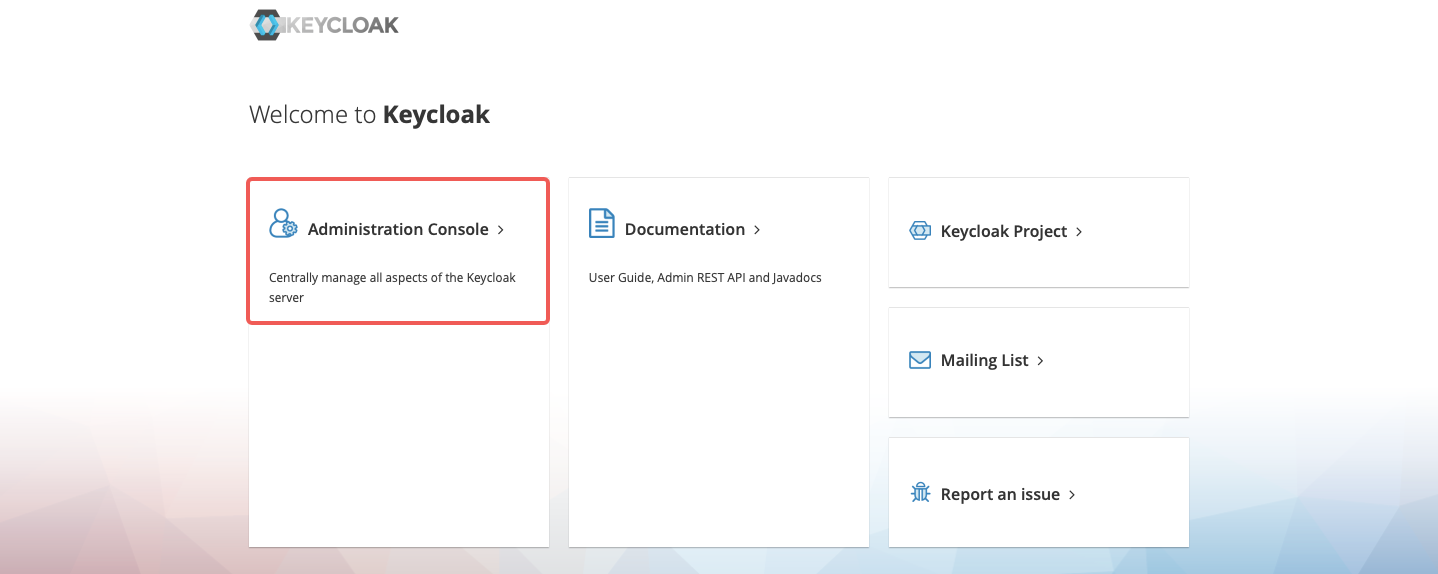
KEYCLOAK_IP=192.168.42.145 # replace with your host IPNavigate to http://localhost:8080 in browser and click Administration Console:
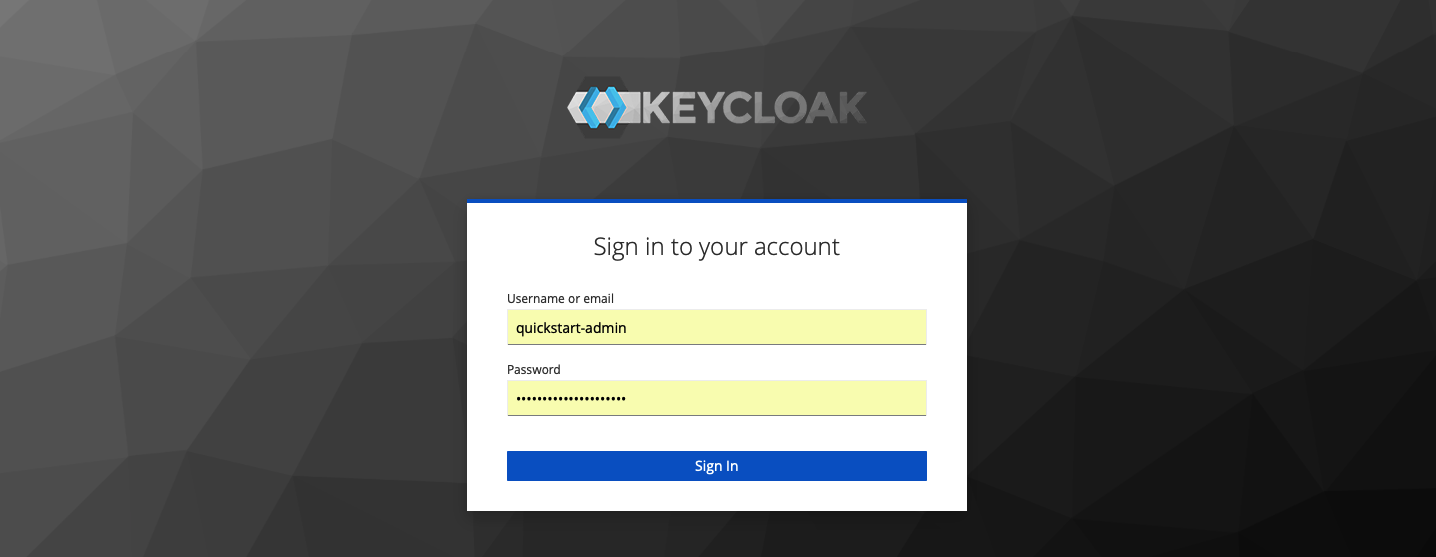
Enter the administrator's username quickstart-admin and password quickstart-admin-pass to sign in:
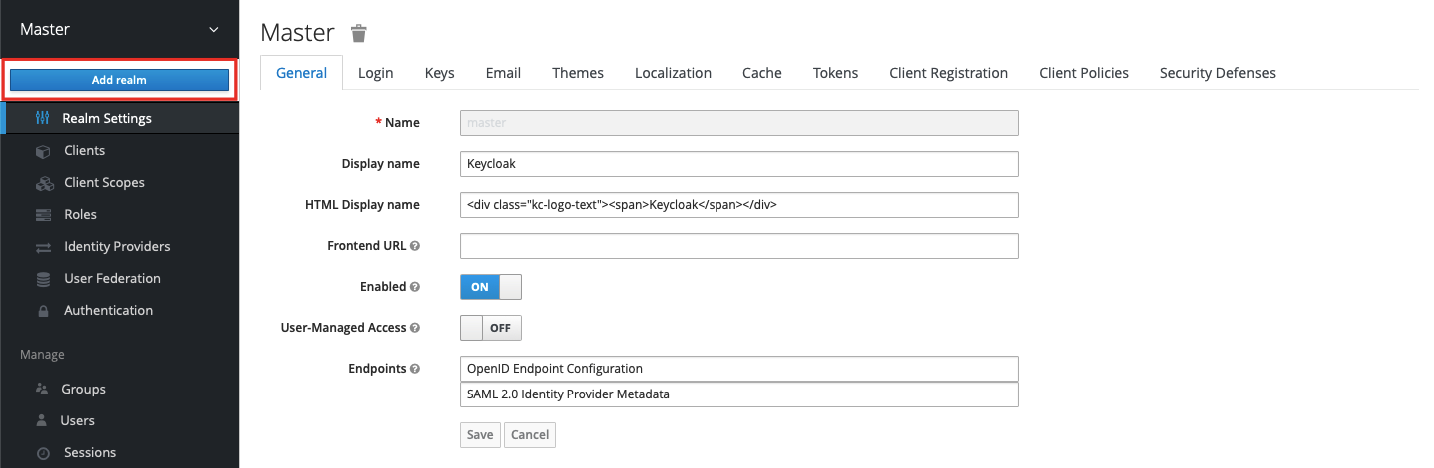
In the left menu, hover over Master, and select Add realm in the dropdown:
Enter the realm name quickstart-realm and click Create to create it:

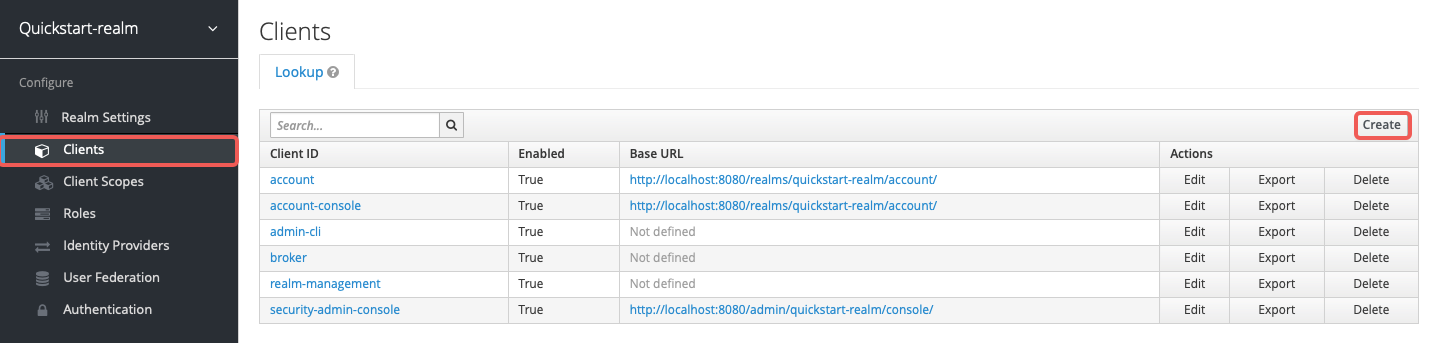
Click Clients > Create to open the Add Client page:
Enter Client ID as apisix-quickstart-client, keep the Client Protocol as openid-connect and Save:
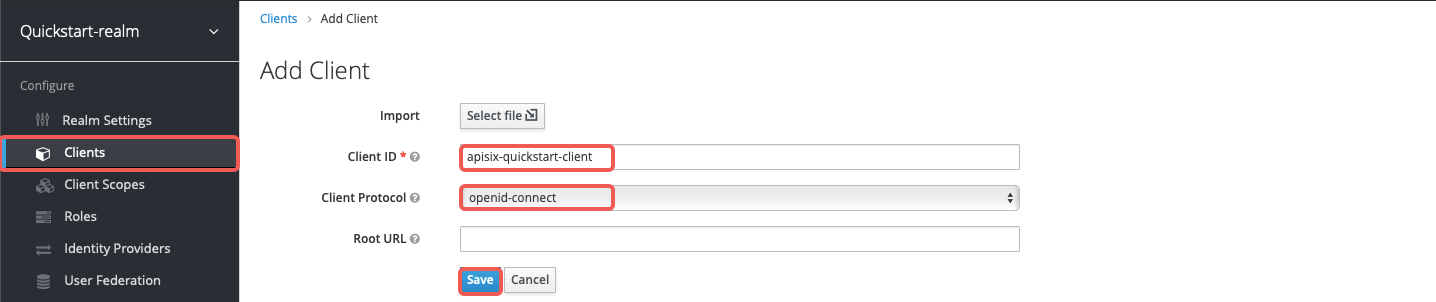
The client apisix-quickstart-client is created. After redirecting to the detailed page, select confidential as the Access Type:

When the user login is successful during the SSO, Keycloak will carry the state and code to redirect the client to the addresses in Valid Redirect URIs. For simplicity of demonstration, enter wildcard * to accept any redirect URI:

Enable authorization for the client, which should also enable service accounts with an assigned role uma_protection automatically:

Select Save to apply custom configurations.
Click on Clients > apisix-quickstart-client > Credentials, and copy the client secret from Secret:
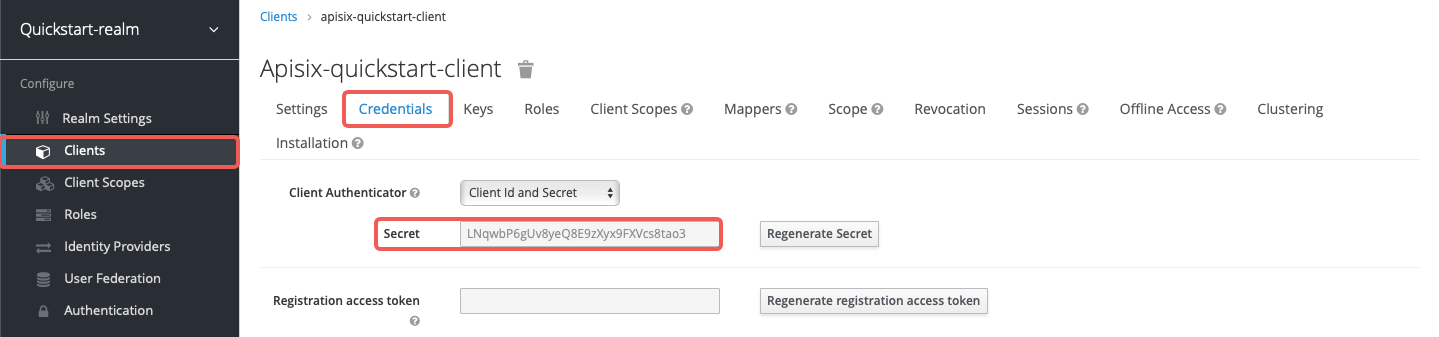
Save the OIDC client ID and secret to environment variables:
OIDC_CLIENT_ID=apisix-quickstart-client
OIDC_CLIENT_SECRET=bSaIN3MV1YynmtXvU8lKkfeY0iwpr9cH  # replace with your value
Request an access token from Keycloak:
curl -i "http://$KEYCLOAK_IP:8080/realms/quickstart-realm/protocol/openid-connect/token" -X POST \
  -d 'grant_type=client_credentials' \
  -d 'client_id='$OIDC_CLIENT_ID'' \
  -d 'client_secret='$OIDC_CLIENT_SECRET''
You should see a response similar to the following:
{"access_token":"eyJhbGciOiJSUzI1NiIsInR5cCIgOiAiSldUIiwia2lkIiA6ICJoT3ludlBPY2d6Y3VWWnYtTU42bXZKMUczb0dOX2d6MFo3WFl6S2FSa1NBIn0...","expires_in":300,"refresh_expires_in":0,"token_type":"Bearer","not-before-policy":0,"scope":"email profile"}
Save the token to an environment variable:
# replace with your access token
ACCESS_TOKEN=<your_access_token>The examples below demonstrate how you can configure the plugin to dynamically resolve the request URI to resource(s) using the resource registration endpoint instead of the static permissions.
Create a route with authz-keycloak-route as follows:
curl "http://127.0.0.1:9180/apisix/admin/routes" -X PUT \
  -H "X-API-KEY: ${admin_key}" \
  -d '{
    "id": "authz-keycloak-route",
    "uri": "/anything",
    "plugins": {
      "authz-keycloak": {
        "lazy_load_paths": true,
        "resource_registration_endpoint": "http://'"$KEYCLOAK_IP"':8080/realms/quickstart-realm/authz/protection/resource_set",
        "discovery": "http://'"$KEYCLOAK_IP"':8080/realms/quickstart-realm/.well-known/uma2-configuration",
        "client_id": "'"$OIDC_CLIENT_ID"'",
        "client_secret": "'"$OIDC_CLIENT_SECRET"'"
      }
    },
    "upstream": {
      "type": "roundrobin",
      "nodes": {
        "httpbin.org": 1
      }
    }
}'- Set
lazy_load_pathstotrue. - Set
resource_registration_endpointto Keycloak's UMA-compliant resource registration endpoint. Required whenlazy_load_pathsistrueanddiscoveryis not provided. - Set
discoveryto the discovery document endpoint of Keycloak authorization services. - Set
client_idto client ID created previously. - Set
client_secretto client secret created previously. Required whenlazy_load_pathsistrue.
Send a request to the route:
curl "http://127.0.0.1:9080/anything" -H "Authorization: Bearer $ACCESS_TOKEN"You should see an HTTP/1.1 200 OK response similar to the following:
{
  "args": {},
  "data": "",
  "files": {},
  "form": {},
  "headers": {
    "Accept": "*/*",
    "Authorization": "Bearer eyJhbGciOiJSU...",
    ...
  },
  "json": null,
  "method": "GET",
  "origin": "127.0.0.1, 108.180.51.111",
  "url": "http://127.0.0.1/anything"
}The examples below demonstrate how you can configure Keycloak for scope-based permission associated with a client scope policy, and configure the authz-keycloak plugin to use static permissions.
Go to Clients > apisix-quickstart-client > Authorization > Authorization Scopes, and click Create to open the Add Scope page:
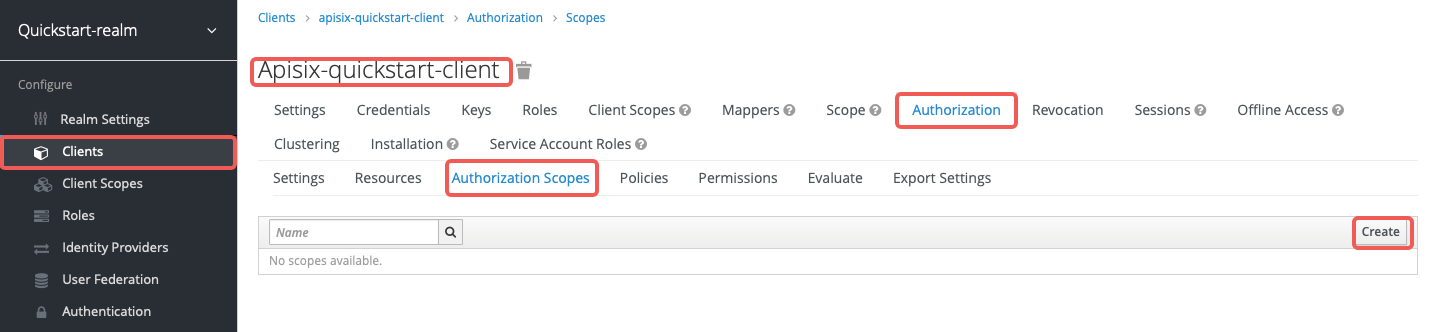
Enter the scope names as access and click Save:

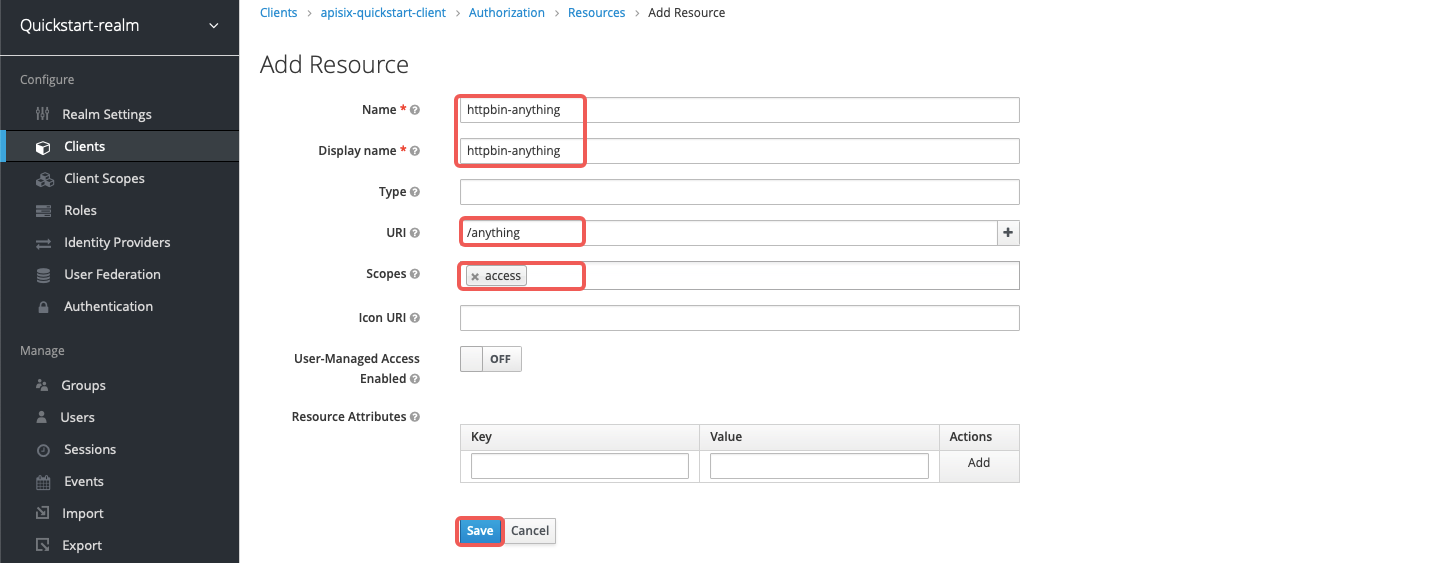
Go to Clients > apisix-quickstart-client > Authorization > Resources and click Create to open the Add Resource page:
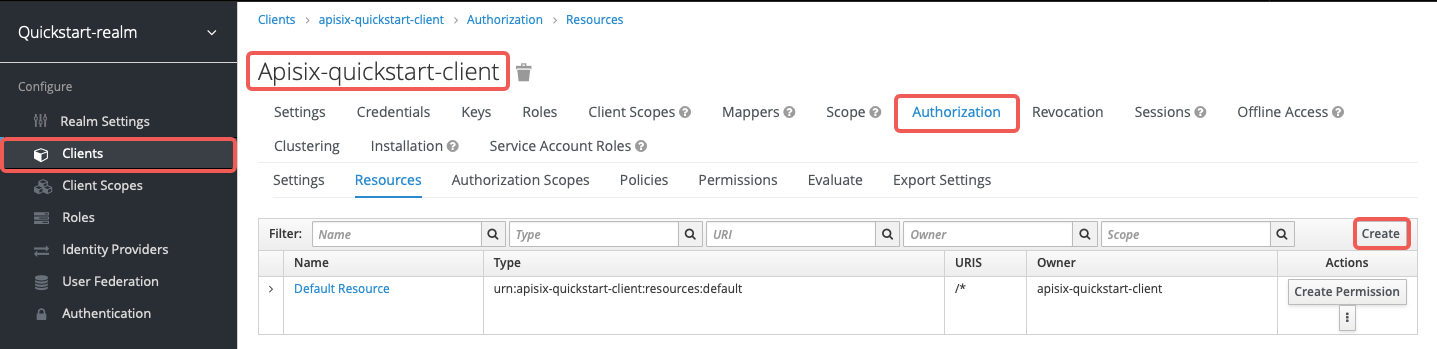
Enter the resource names httpbin-anything, URI /anything, scope access, and click Save:
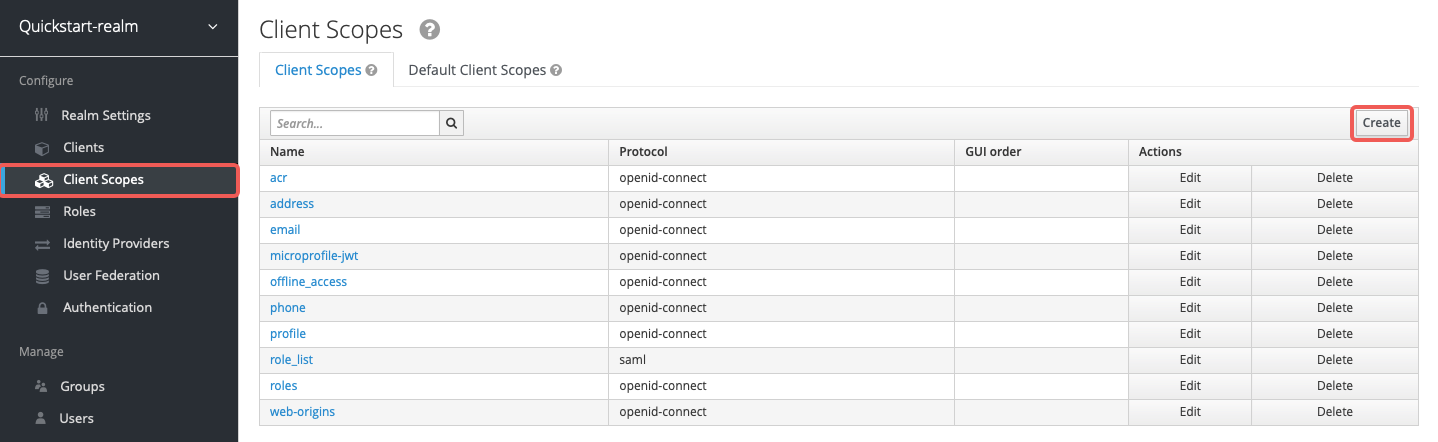
Go to Client Scopes and click Create to open the Add client scope page:
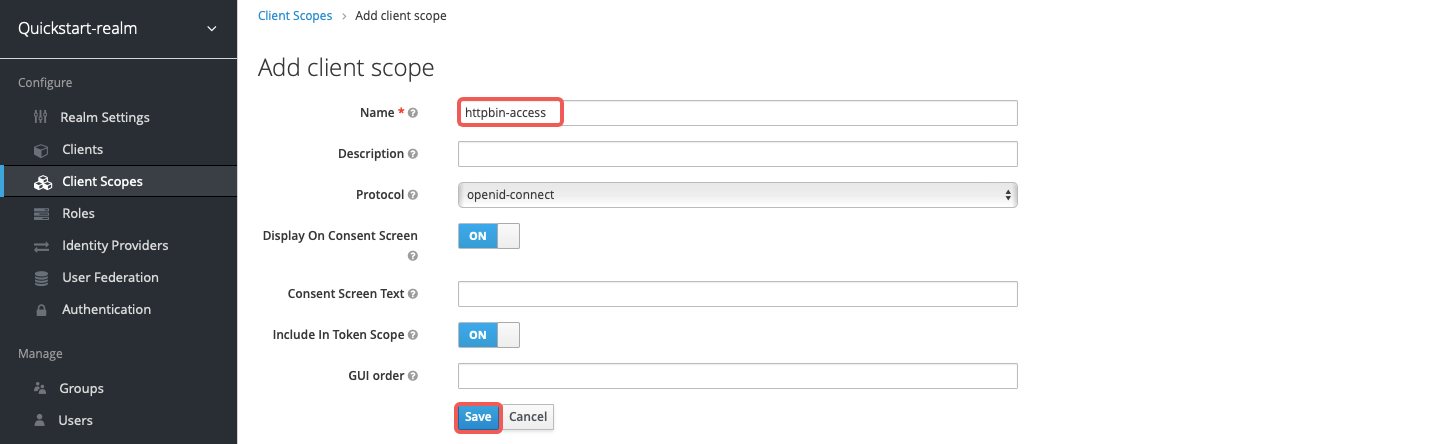
Enter the scope name httpbin-access and click Save:
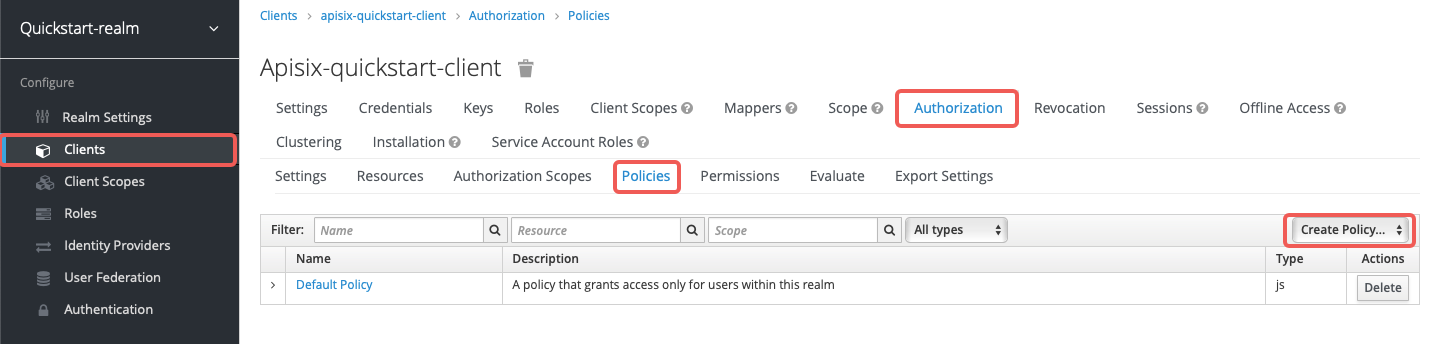
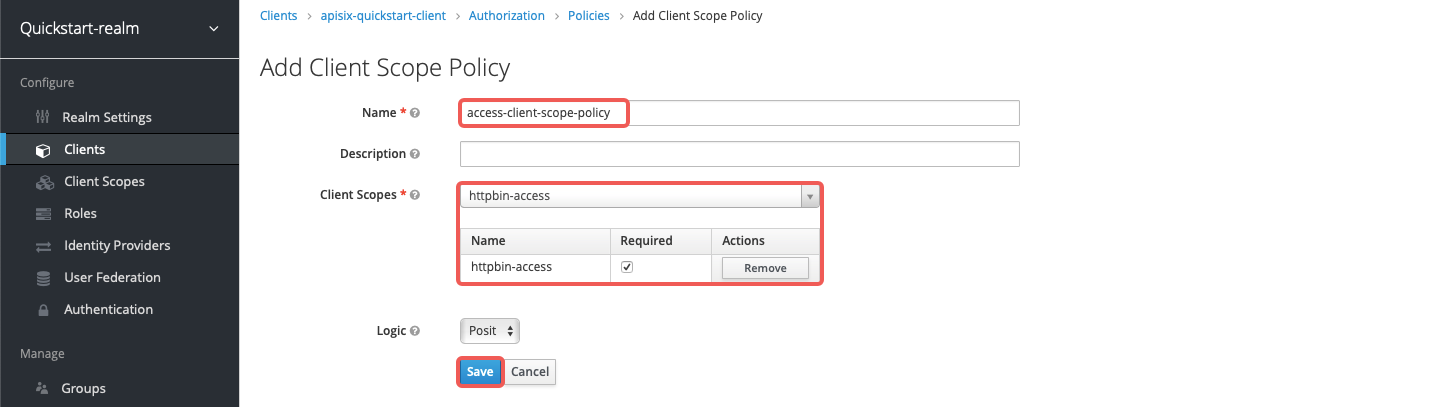
Go to Clients > apisix-quickstart-client > Authorization > Policies > Create Policies and select Client Scope from the dropdown to open the Add Client Scope Policy page:
Enter the policy name access-client-scope-policy for client scope httpbin-access, check the Required box, and click Save:
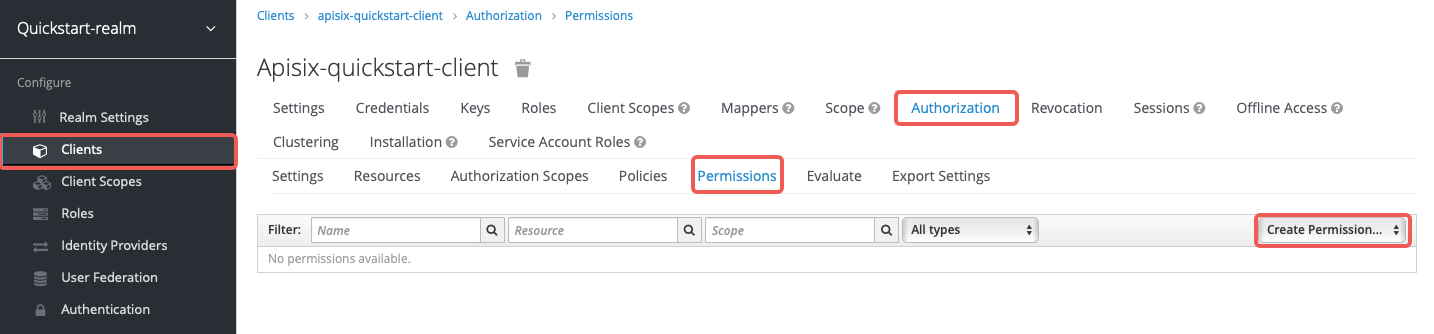
Go to Clients > apisix-quickstart-client > Authorization > Permissions > Create Permissions and select Scope-Based from the dropdown to open the Add Scope Permission page:
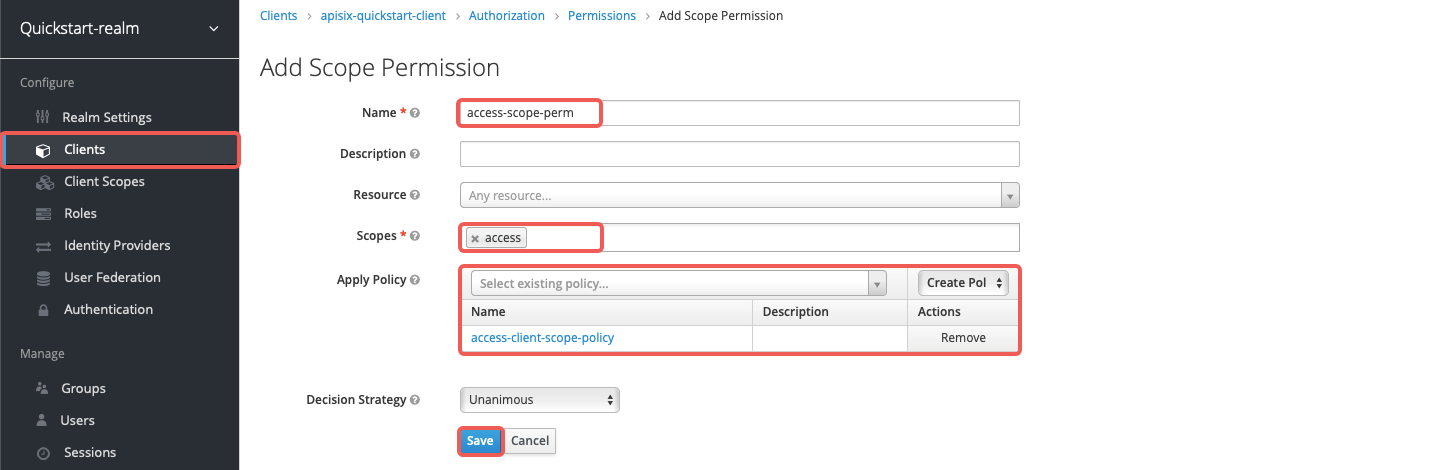
Enter the permission name access-scope-perm, select the access scope, apply the policy access-client-scope-policy, and click Save:
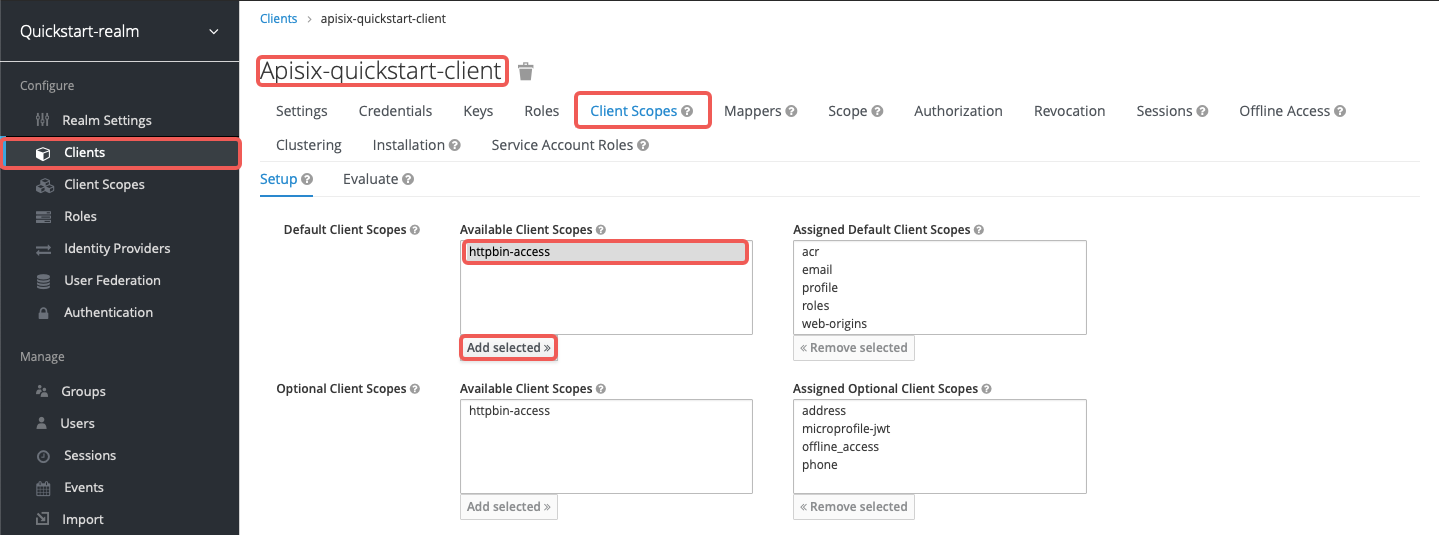
Go to Clients > apisix-quickstart-client > Client Scopes and add httpbin-access to the default client scopes:
Create a route with authz-keycloak-route as follows:
curl "http://127.0.0.1:9180/apisix/admin/routes" -X PUT \
  -H "X-API-KEY: ${admin_key}" \
  -d '{
    "id": "authz-keycloak-route",
    "uri": "/anything",
    "plugins": {
      "authz-keycloak": {
        "lazy_load_paths": false,
        "discovery": "http://'"$KEYCLOAK_IP"':8080/realms/quickstart-realm/.well-known/uma2-configuration",
        "permissions": ["httpbin-anything#access"],
        "client_id": "apisix-quickstart-client"
      }
    },
    "upstream": {
      "type": "roundrobin",
      "nodes": {
        "httpbin.org": 1
      }
    }
}'- Set
lazy_load_pathstofalse. - Set
discoveryto the discovery document endpoint of Keycloak authorization services. - Set
permissionsto resourcehttpbin-anythingand scopeaccess.
Send a request to the route:
curl "http://127.0.0.1:9080/anything" -H "Authorization: Bearer $ACCESS_TOKEN"You should see an HTTP/1.1 200 OK response similar to the following:
{
  "args": {},
  "data": "",
  "files": {},
  "form": {},
  "headers": {
    "Accept": "*/*",
    "Authorization": "Bearer eyJhbGciOiJSU...",
    ...
  },
  "json": null,
  "method": "GET",
  "origin": "127.0.0.1, 108.180.51.111",
  "url": "http://127.0.0.1/anything"
}
If you remove the client scope httpbin-access for apisix-quickstart-client, you should receive a 401 Unauthorized response when requesting the resource.
The examples below demonstrate how you can generate a token using the password grant at a custom endpoint.
To use the password grant, you should first create a user.
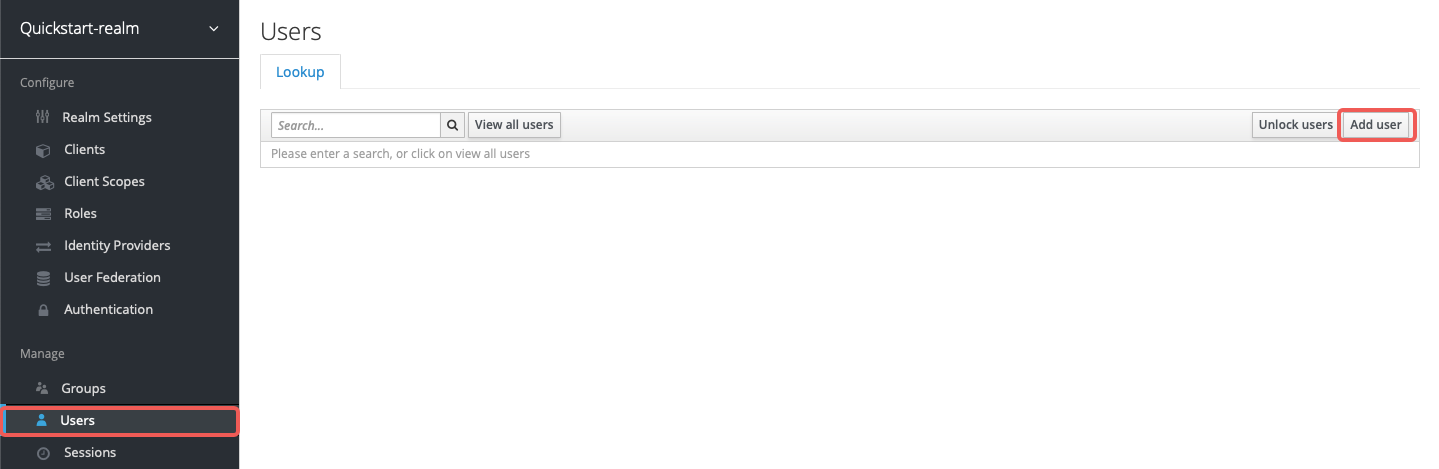
Go to Users > Add user and click on Add user:
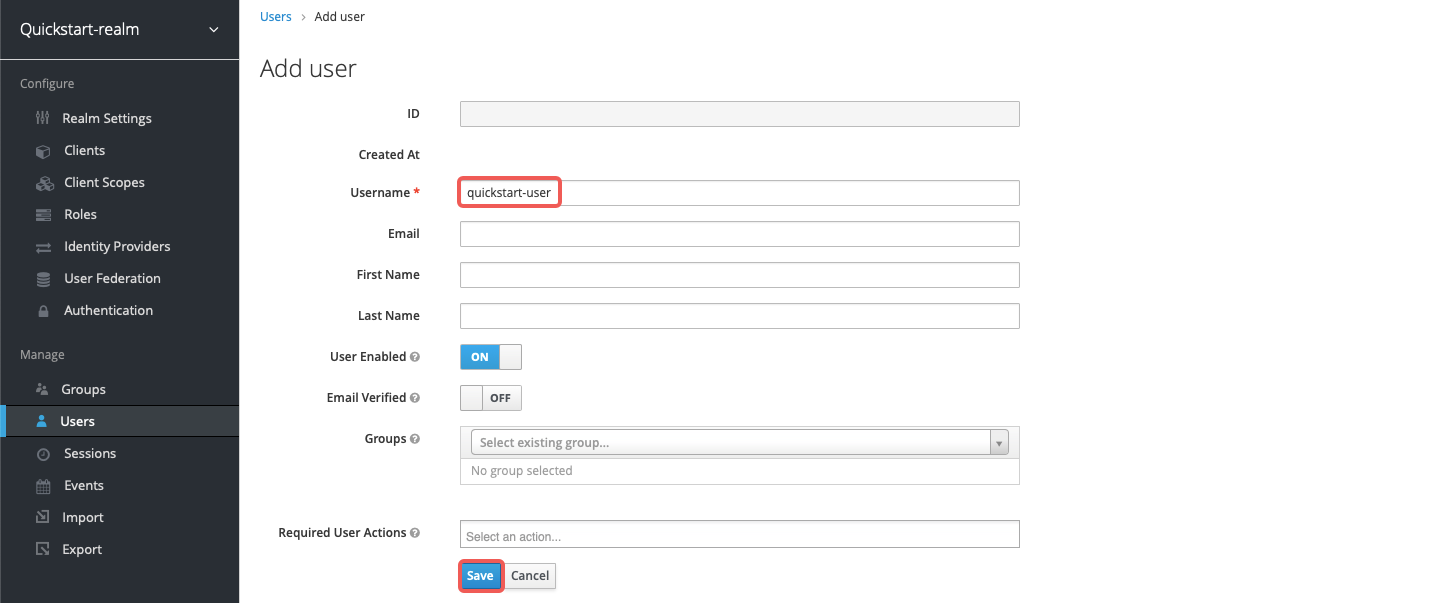
Enter the Username as quickstart-user and select Save:
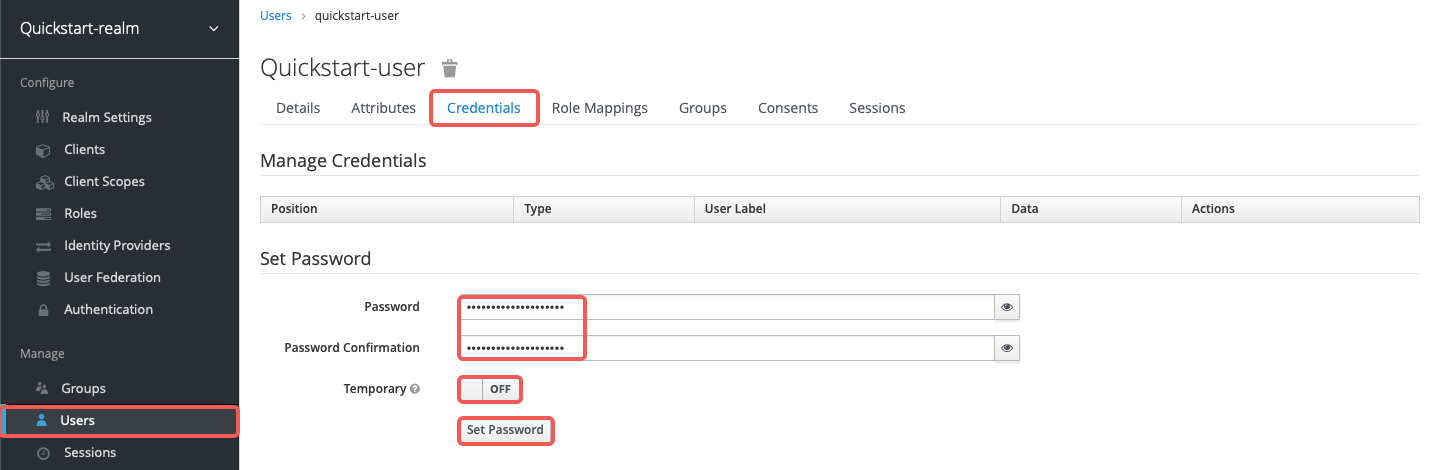
Click on Credentials, then set the Password as quickstart-user-pass. Switch Temporary to OFF so that you do not need to change the password the first time you log in:
Create a route with authz-keycloak-route as follows:
curl "http://127.0.0.1:9180/apisix/admin/routes" -X PUT \
  -H "X-API-KEY: ${admin_key}" \
  -d '{
    "id": "authz-keycloak-route",
    "uri": "/api/*",
    "plugins": {
      "authz-keycloak": {
        "lazy_load_paths": true,
        "resource_registration_endpoint": "http://'"$KEYCLOAK_IP"':8080/realms/quickstart-realm/authz/protection/resource_set",
        "client_id": "'"$OIDC_CLIENT_ID"'",
        "client_secret": "'"$OIDC_CLIENT_SECRET"'",
        "token_endpoint": "http://'"$KEYCLOAK_IP"':8080/realms/quickstart-realm/protocol/openid-connect/token",
        "password_grant_token_generation_incoming_uri": "/api/token"
      }
    },
    "upstream": {
      "type": "roundrobin",
      "nodes": {
        "httpbin.org": 1
      }
    }
}'- Set
token_endpointto the Keycloak token endpoint. Required when discovery document is not provided. - Set
password_grant_token_generation_incoming_urito a custom URI path users can obtain tokens from.
Send a request to the configured token endpoint. Note that the request should use the POST method and application/x-www-form-urlencoded as the Content-Type:
OIDC_USER=quickstart-user
OIDC_PASSWORD=quickstart-user-pass

curl "http://127.0.0.1:9080/api/token" -X POST \
  -H "Content-Type: application/x-www-form-urlencoded" \
  -H "Accept: application/json" \
  -d 'username='$OIDC_USER'' \
  -d 'password='$OIDC_PASSWORD''
You should see a JSON response with the access token, similar to the following:
{"access_token":"eyJhbGciOiJSUzI1NiIsInR5cCIgOiAiSldUIiwia2lkIiA6ICJ6U3FFaXN6VlpuYi1sRWMzZkp0UHNpU1ZZcGs4RGN3dXI1Mkx5V05aQTR3In0...","expires_in":300,"refresh_expires_in":1800,"refresh_token":"eyJhbGciOiJIUzI1NiIsInR5cCIgOiAiSldUIiwia2lkIiA6ICI0YjFiNTQ3Yi0zZmZjLTQ5YzQtYjE2Ni03YjdhNzIxMjk1ODcifQ...","token_type":"Bearer","not-before-policy":0,"session_state":"b16b262e-1056-4515-a455-f25e077ccb76","scope":"profile email"}